Every year, cardiovascular emergencies claim millions of lives worldwide, and in the United States alone, someone suffers a heart attack or stroke roughly every 40 seconds. These events often happen suddenly and without warning, leaving little time to react. Understanding the difference between a stroke and a heart attack matters because fast, informed action can dramatically improve survival and long-term outcomes. Although they share similar risk factors and urgency, they affect different organs and present with different warning signs. In this complete guide, you will learn how strokes and heart attacks differ, which is more serious, how to recognize symptoms, what first aid steps to take, and how to reduce your risk through prevention and training.
What is the Difference Between a Stroke and a Heart Attack?
Understanding a Heart Attack
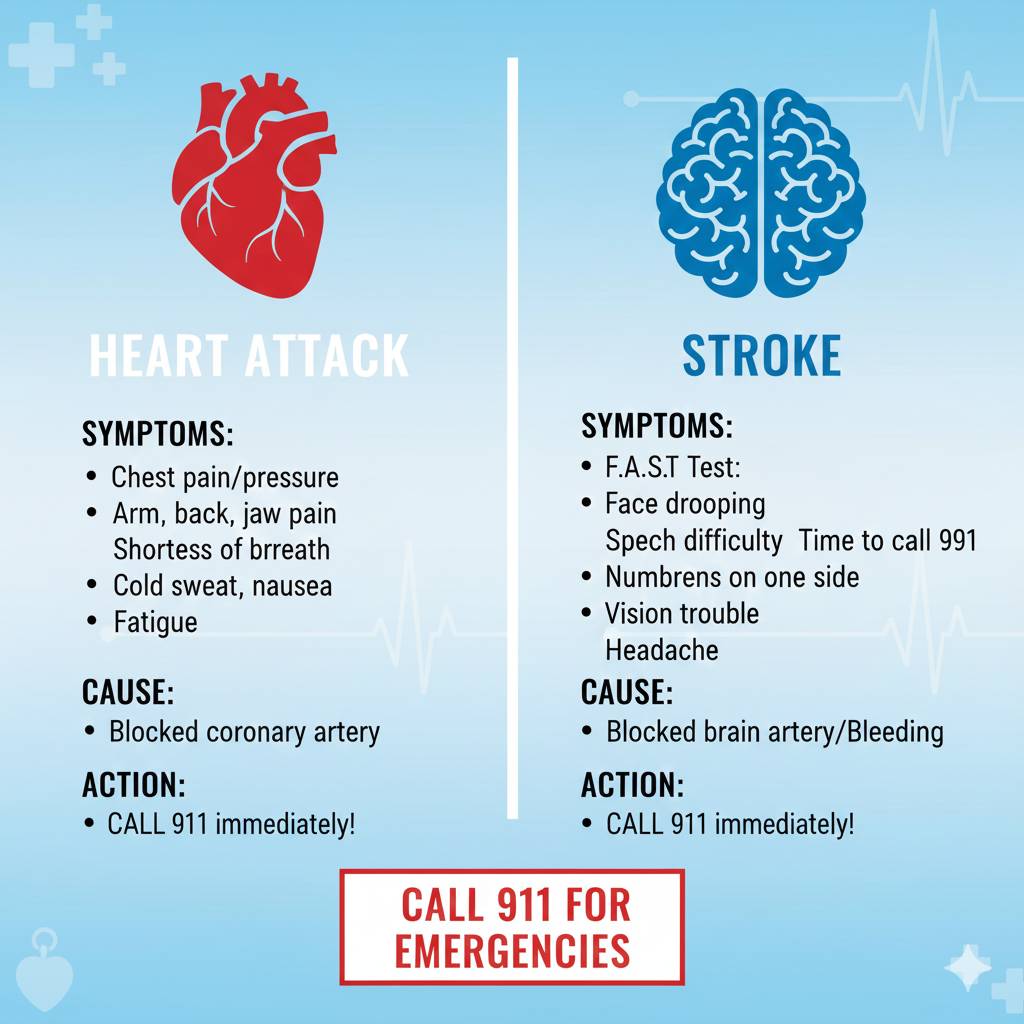
A heart attack and a stroke are both medical emergencies caused by disrupted blood flow, but they affect different parts of the body. A heart attack occurs when blood flow to the heart muscle is blocked, usually by a buildup of plaque that ruptures and forms a clot in a coronary artery. Without oxygen-rich blood, heart muscle tissue begins to die, weakening the heart’s ability to pump effectively. Chest pain, pressure, or discomfort is the most recognized symptom, but heart attacks can also present with shortness of breath, nausea, sweating, or pain radiating to the arm, jaw, or back.
Understanding a Stroke
A stroke, by contrast, occurs in the brain. During a stroke, blood flow to a part of the brain is interrupted, depriving brain cells of oxygen and nutrients. This disruption may be caused by a clot blocking an artery, known as an ischemic stroke, or by bleeding from a ruptured blood vessel, called a hemorrhagic stroke. There is also a transient ischemic attack, often referred to as a mini stroke, which causes temporary symptoms but signals a high risk for a future major stroke. Because the brain controls movement, speech, and vital functions, the effects of a stroke can be immediate and devastating.
Key Differences Between the Two
The key differences between a heart attack and a stroke lie in the affected organ, symptoms, and potential long-term impact. Heart attacks primarily damage the heart muscle, while strokes damage brain tissue. A person having a heart attack may remain conscious and able to speak, whereas a stroke often affects speech, facial movement, or one side of the body. Both conditions require urgent medical care, but recognizing which one is happening helps ensure the right response as quickly as possible.
Which is More Serious: A Stroke or Heart Attack?
Many people ask which is more serious, a stroke or a heart attack. The truth is that both are extremely serious, and the outcome depends on severity, timing, and access to treatment. Mortality rates vary, but both conditions rank among the leading causes of death worldwide. Heart attacks often have a higher immediate survival rate due to advances in emergency cardiac care, while strokes are more likely to cause long-term disability. Stroke survivors may face challenges with mobility, speech, memory, or independence that can last a lifetime.
Despite these differences, both strokes and heart attacks demand immediate action. Delays in treatment increase the amount of tissue damage, whether it is heart muscle or brain cells. The verdict is clear that neither condition should be considered less urgent than the other. In both cases, minutes matter, and rapid recognition followed by emergency medical care saves lives.
How Do I Know if I Am Having a Stroke or Heart Attack?
Knowing how to tell if you are having a stroke or a heart attack can be lifesaving. Heart attack warning signs often include chest pain or pressure that lasts more than a few minutes or goes away and comes back. Other symptoms may include shortness of breath, cold sweats, nausea, lightheadedness, or discomfort in the upper body. It is important to note that symptoms can vary, especially in women, older adults, and people with diabetes.
Stroke warning signs are commonly taught using the F.A.S.T. method. F stands for face drooping, where one side of the face appears uneven. A stands for arm weakness, often noticed when one arm drifts downward when both are raised. S stands for speech difficulty, such as slurred or hard-to-understand speech. T stands for time to call emergency services immediately. Additional symptoms may include sudden confusion, vision problems, severe headache, or difficulty walking.
There are times when symptoms overlap, making it confusing to determine which emergency is occurring. Shortness of breath, dizziness, or sudden weakness can appear in both conditions. When in doubt, it is always safest to treat the situation as an emergency and call for help right away. Risk assessment also plays a role, as factors like high blood pressure, smoking, obesity, and family history increase the likelihood of both strokes and heart attacks.
First Aid for Stroke and Heart Attack
First aid response differs slightly between the two emergencies, but the priority is always activating emergency medical services. For a suspected heart attack, have the person sit down and rest while help is on the way. If the person is conscious and not allergic, aspirin may be recommended by emergency dispatchers to help reduce clot formation. For a suspected stroke, keep the person safe and comfortable, note the time symptoms began, and do not give food or drink. This information is critical for treatment decisions once professionals arrive.
There are also important things not to do. Do not delay calling for help in hopes that symptoms will pass. Do not allow the person to drive themselves to the hospital. Do not give medications unless directed by emergency professionals. Proper training helps remove hesitation and ensures that bystanders respond correctly under pressure.
Professional training plays a vital role in improving outcomes for both stroke and heart attack emergencies. Courses in CPR and First Aid teach how to recognize warning signs, perform life-saving interventions, and work confidently until advanced care arrives. Training often connects related skills, such as using an AED for sudden cardiac arrest or managing choking and breathing emergencies, creating a well-rounded emergency response foundation.
Prevention: Reducing Your Risk
Prevention is another powerful tool in reducing the risk of stroke and heart attack. Many prevention strategies overlap, including maintaining a healthy diet, exercising regularly, managing stress, and avoiding tobacco use. Controlling blood pressure, cholesterol, and blood sugar levels significantly lowers risk for both conditions. For heart attack prevention specifically, managing coronary artery disease and maintaining heart-healthy habits is key. For stroke prevention, addressing atrial fibrillation, carotid artery disease, and clotting risks plays an important role.
Understanding the difference between a stroke and a heart attack empowers you to act quickly and confidently during a cardiovascular emergency. Both conditions are serious, time-sensitive, and potentially life-altering, but early recognition and response can save lives and reduce long-term damage. Knowledge, preparation, and training turn bystanders into capable responders. Be the difference in someone’s life. Visit CPR Cincinnati today to enroll in American Heart Association-certified courses. Our stress-free, hands-on classes in BLS, ACLS, PALS, and CPR and First Aid will equip you with the skills and confidence to respond when seconds count. Don’t wait, sign up now and become a certified lifesaver.
FAQS About Stroke vs Heart Attack
- What’s the main difference between a stroke and a heart attack? The primary difference lies in where the blockage occurs. A heart attack happens when blood flow to the heart muscle is blocked, usually by a blood clot in the coronary arteries. A stroke occurs when blood flow to the brain is interrupted, either by a blockage (ischemic stroke) or a burst blood vessel (hemorrhagic stroke). While both involve disrupted blood flow, they affect different organs and require different immediate treatments.
- Can the symptoms of stroke and heart attack overlap? Yes, some symptoms can overlap, which is why both emergencies require immediate medical attention. Both conditions can cause sweating, nausea, and dizziness. However, heart attacks typically involve chest pain and discomfort radiating to the arms, jaw, or back, while strokes usually present with sudden numbness, confusion, trouble speaking, vision problems, or loss of balance. The key is recognizing that any sudden, severe symptoms warrant calling 911 immediately.
- How can CPR help during a stroke or heart attack? CPR is primarily used when someone’s heart stops beating, or they stop breathing, which can happen during a severe heart attack. While CPR doesn’t treat the underlying blockage, it manually pumps blood through the body to keep vital organs alive until emergency medical services arrive. For strokes, CPR is less commonly needed unless the person becomes unconscious and stops breathing. However, knowing CPR ensures you’re prepared to act confidently in any cardiac or neurological emergency.
Conclusion and Call to Action
Understanding the differences between a stroke and a heart attack can save lives. Both conditions require immediate emergency response, and every second counts. While calling 911 is always the first step, knowing how to perform CPR and basic life support can make you a vital link in the chain of survival when someone experiences a cardiac emergency.
Don’t wait until an emergency happens to wish you were prepared. Equip yourself with lifesaving skills that give you confidence to act when it matters most. Whether you’re a healthcare professional needing certification or a concerned citizen wanting to protect your loved ones, proper training makes all the difference.
Ready to become someone’s hero? CPR Cincinnati, an American Heart Association training site, offers stress-free, hands-on CPR certification in Cincinnati and BLS classes in Cincinnati. Our expert instructors provide initial certifications and renewals in BLS for Healthcare Providers, ACLS, PALS, and CPR and First Aid courses. With practical, real-world training, you’ll gain the skills and confidence to respond effectively in emergencies.
Enroll in a class today and be prepared to save a life tomorrow. Visit CPR Cincinnati or call to register for your certification course.