Cardiac arrest does not wait for a convenient moment. It can happen at a family gathering, in a hospital hallway, or on a school playground — and in those first critical minutes, a bystander with CPR training can mean the difference between life and death. The American Heart Association reports that effective bystander CPR can double or triple a cardiac arrest victim’s chance of survival. For Cincinnati residents and healthcare professionals, understanding the cost of CPR certification is the first step toward getting trained. CPR Cincinnati is an AHA-authorized training site offering a full range of certification courses designed to fit different needs, schedules, and budgets.
How Much Does CPR Certification Cost in Cincinnati?
Average Cost Ranges by Course Type
CPR certification costs vary depending on the course level, the audience it serves, and whether materials are included. The following ranges reflect standard pricing for AHA-certified courses at CPR Cincinnati:
- BLS for Healthcare Providers — approximately $80, covering the foundational certification required by most clinical employers
- ACLS (Advanced Cardiovascular Life Support) — approximately $200–$300, reflecting the advanced clinical content and extended course format
- PALS (Pediatric Advanced Life Support) — approximately $200–$300, designed for providers working in pediatric care environments
- CPR and First Aid (lay rescuer/community courses) — approximately $75–$100, making essential emergency skills accessible to the general public
These price points are consistent with AHA-authorized training sites and reflect the quality of instruction, materials, and certification included in each course.
What’s Included in the Cost?
CPR certification at CPR Cincinnati is not just a fee for a card. Every course includes a complete training experience designed to produce genuinely competent providers. Included in the cost are:
- AHA course materials — current, evidence-based content aligned with the latest AHA guidelines
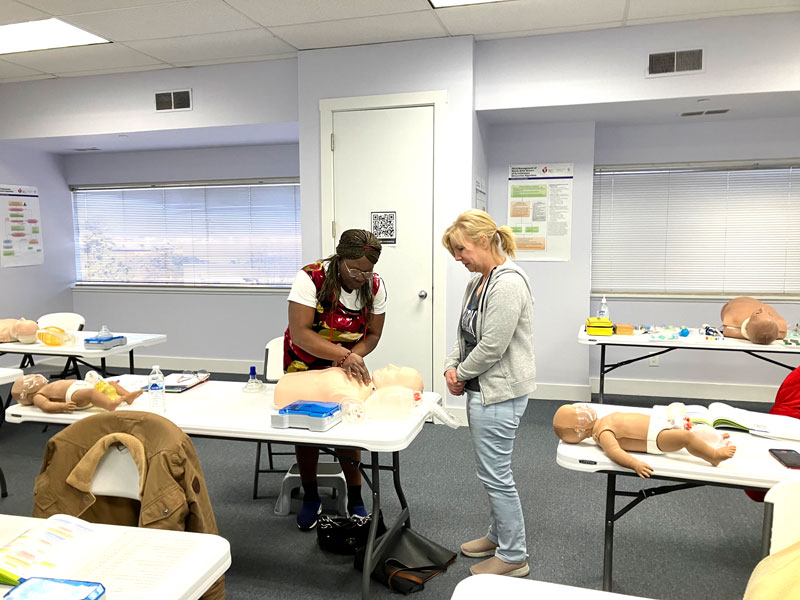
- Hands-on training and manikin practice — active skill development with appropriate equipment for each course level
- AHA certification card — issued upon successful completion and valid for two years
- Instructor-led, stress-free learning environment — personalized guidance from experienced, certified instructors
There are no hidden fees or surprise charges at registration. What is listed is what is covered.
Group and Employer Discounts
Organizations that need to certify multiple staff members at once can explore on-site training options through CPR Cincinnati. Hospitals, outpatient clinics, schools, childcare facilities, and businesses can arrange group training sessions that bring the course directly to their location. On-site training reduces scheduling complexity, minimizes time away from work, and can offer cost advantages for larger groups. Department managers and HR teams responsible for maintaining staff certification compliance will find this option particularly efficient.
CPR Certification Courses Offered at CPR Cincinnati
BLS for Healthcare Providers
BLS certification is the baseline credential required for virtually every clinical healthcare role. It is designed for nurses, physicians, EMTs, paramedics, respiratory therapists, dental professionals, and medical and nursing students entering clinical rotations. The course covers high-quality CPR for adults, children, and infants, proper AED operation, relief of airway obstruction, bag-mask ventilation, and team-based resuscitation with closed-loop communication. BLS certification is valid for two years and is recognized by hospitals, health systems, and licensing boards nationwide.
ACLS Certification
Advanced Cardiovascular Life Support certification is required for healthcare providers who manage high-acuity cardiac and respiratory emergencies. It is most commonly required for emergency department staff, ICU nurses, physicians, paramedics, and code team members. The ACLS curriculum builds on BLS foundations and introduces more complex clinical competencies, including:
- Advanced airway management — supraglottic airways, bag-mask technique, and ventilation strategies
- ECG rhythm recognition — identifying and responding to shockable and non-shockable arrest rhythms
- Pharmacology in resuscitation — appropriate use of epinephrine, amiodarone, and other critical medications
- Cardiac arrest algorithms — managing VF, pulseless VT, PEA, and asystole using current AHA protocols
ACLS certification is valid for two years and is a standard requirement for hospital credentialing across most specialty areas.
PALS Certification
Pediatric Advanced Life Support is the clinical standard for providers working with critically ill or injured children. It is required for pediatric nurses, pediatric emergency physicians, neonatologists, PICU staff, and pediatric transport teams. The PALS curriculum addresses the unique physiological differences between pediatric and adult patients and covers respiratory distress and failure, shock recognition and management, cardiac arrest in children, and the systematic ABCDE assessment approach. Like ACLS, PALS certification is valid for two years and meets the requirements of most pediatric credentialing bodies.
CPR and First Aid — Community and Lay Rescuer Courses
Not every person who needs CPR training works in a clinical setting. Teachers, coaches, parents, childcare workers, fitness professionals, and community members all benefit from knowing how to respond in a cardiac emergency. CPR Cincinnati’s community-level courses are designed for lay rescuers who want practical emergency skills without the clinical depth of healthcare provider certifications. These courses cover adult and child CPR, AED use, choking response, and basic first aid for common injuries and medical emergencies. The HeartSaver CPR and First Aid course is priced at approximately $75–$100 and is ideal for individuals and workplace teams outside of clinical environments.
Why Choose CPR Cincinnati?
CPR Cincinnati brings together everything that makes certification both achievable and meaningful. As an AHA-authorized training site, every course is delivered using the current AHA curriculum and produces a certification card that is recognized by employers, licensing bodies, and credentialing organizations across the country.
The training environment at CPR Cincinnati is intentionally designed to reduce anxiety and build genuine competency. Instructors are certified professionals with real-world clinical experience who prioritize practical skill development over test performance pressure. Small class sizes allow for personalized feedback and sufficient hands-on practice time — a meaningful difference compared to large, impersonal training events.
Flexible scheduling options accommodate a wide range of professional and personal commitments. Weekday, evening, and weekend classes are available for individuals, while group and on-site options serve organizations with larger certification needs. The convenient Cincinnati location minimizes commute time and removes one more barrier to staying current and compliant.
Is CPR Certification Worth the Cost?
The short answer is yes — and the case for it goes well beyond fulfilling a job requirement. Cardiac arrest strikes approximately 350,000 people outside of hospital settings in the United States each year, according to the American Heart Association. In the majority of those cases, bystanders are present before emergency services arrive. A trained bystander who begins CPR immediately and uses an AED significantly improves the victim’s chances of survival and neurologically intact recovery.
For healthcare professionals, current CPR certification is non-negotiable. Hospitals, outpatient clinics, and licensing boards require it as a baseline standard. Allowing certification to lapse can result in removal from patient care duties, compliance violations, and delays in credentialing or shift eligibility — all of which create professional and financial consequences that far outweigh the cost of a renewal course.
For the general public — parents, teachers, coaches, and community members — CPR training provides something that no amount of preparation can fully replace: the confidence to act. Knowing what to do in the first two to four minutes of a cardiac emergency transforms a bystander from a helpless witness into a potential lifesaver. The return on that investment is not measured in dollars.
Conclusion & Call to Action
Understanding CPR certification costs in Cincinnati helps you make an informed decision before enrolling. Whether you’re a healthcare professional or a community member, investing in CPR training is investing in the ability to save lives. Costs are generally affordable, and many providers offer flexible scheduling to fit your needs.
Ready to get certified? CPR Cincinnati makes it easy and stress-free. As an American Heart Association training site, we offer hands-on CPR certification in Cincinnati for individuals and groups at competitive prices. Whether you need BLS certification in Cincinnati for your healthcare career or a CPR and First Aid course for personal readiness, our expert instructors have you covered. We also offer ACLS and PALS certifications and renewals.
Don’t wait for an emergency to wish you were prepared — register today at CPR Cincinnati and gain the confidence to act when it matters most!
3 FAQs: CPR Certification Cost in Cincinnati
Q1: How much does CPR certification cost in Cincinnati? CPR certification in Cincinnati typically ranges from $30 to $80, depending on the course type. BLS for Healthcare Providers, ACLS, and PALS may cost more than a basic CPR and First Aid class. CPR Cincinnati offers transparent, competitive pricing for all American Heart Association courses.
Q2: Does the cost of CPR certification in Cincinnati include a card? Yes! At CPR Cincinnati, your course fee includes your American Heart Association certification card upon successful completion. There are no hidden fees — what you pay covers your hands-on training and official credentials.
Q3: Are there group discounts available for CPR certification in Cincinnati? Many training sites, including CPR Cincinnati, offer group or corporate pricing for teams and organizations. If you’re looking to certify multiple employees or staff members, contact CPR Cincinnati directly to ask about discounted rates for group enrollments.